Objective
Improve website performance, product discovery and organic-search foundations for qualified enquiries.
How KaliNova AI strengthened Asian Fineline’s website performance, technical SEO, content structure and commercial search foundation.
Improve website performance, product discovery and organic-search foundations for qualified enquiries.
Technical SEO, performance optimisation, search-intent mapping, content improvement and internal linking.
Evidence note: This page describes the project scope and approach. Original dated performance reports are not published alongside this narrative, so no numerical speed, traffic, lead or revenue improvement is claimed here. Project-specific outcomes should be assessed using the source reports, dates, tested URLs and measurement conditions.
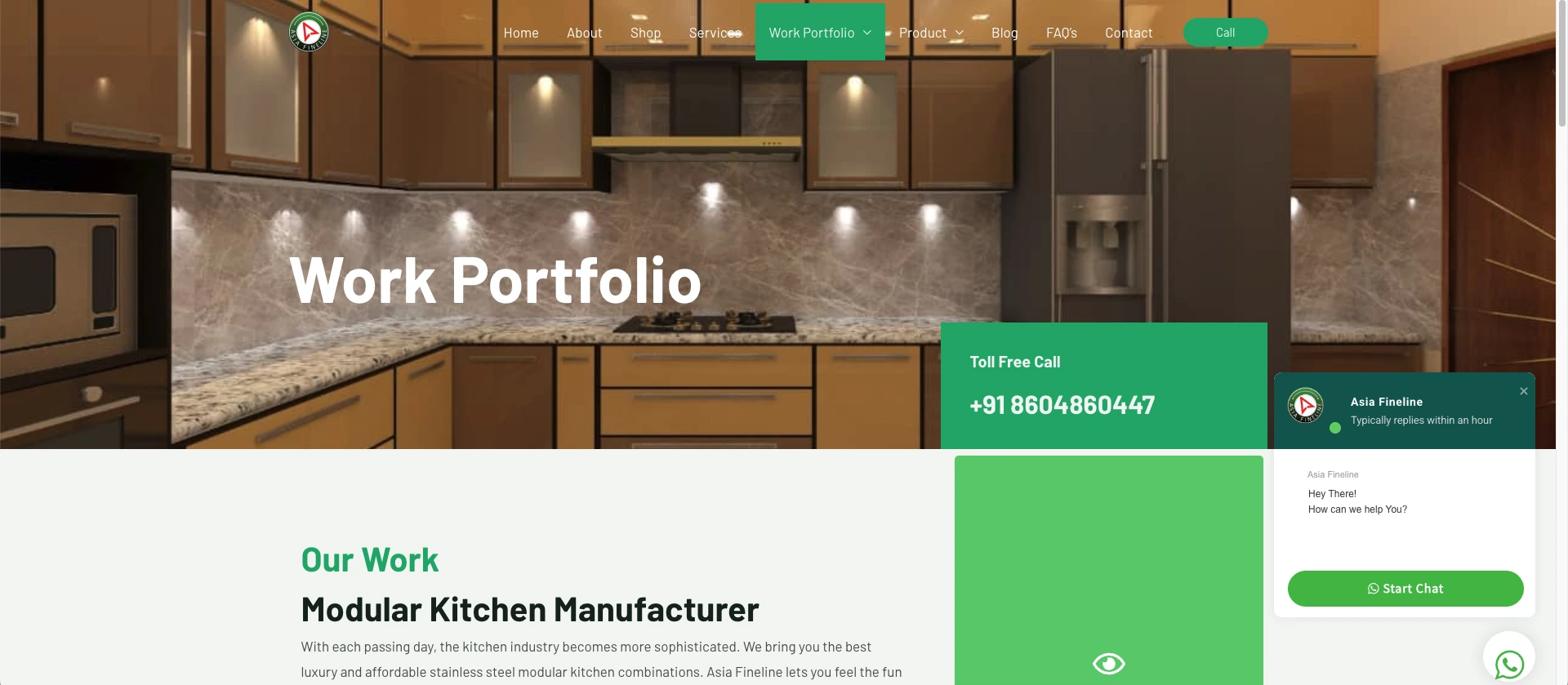
Asian Fineline manufactures stainless-steel modular kitchens, commercial cabinets, custom kitchen systems and related fittings. Its offline capability was not represented clearly online, while the website’s speed, search structure and product content limited discoverability.
The project combined technical and content problems rather than one isolated ranking issue.
Heavy media, unused code and limited delivery optimisation affected page speed and usability.
Commercial pages did not consistently target a defined customer need or search intent. Metadata, page headings and internal links required restructuring.
Category and product pages needed clearer descriptions, decision-support information and calls to action for architects, hospitality teams, commercial buyers and homeowners.
KaliNova AI reviewed crawlability, metadata duplication, URL structure, broken links, image delivery, unused code and structured-data opportunities. Corrections were prioritised according to their effect on discovery and user experience.
The work included image conversion and compression, lazy loading, code reduction, caching and delivery improvements. Performance was an implementation priority. Original comparable test reports are not attached to this page, so the narrative does not assert a numerical improvement.
Commercial search themes were assigned to the pages best able to answer them. This reduced ambiguity between product, category and informational content and created a clearer internal-link structure.
Titles, descriptions, headings, category explanations, product content, FAQs and internal links were improved. The content was written to help buyers compare options and understand manufacturing capability—not merely to repeat keywords.
Search visibility, clicks, landing-page behaviour and enquiry paths were reviewed as connected signals. Search rankings were used to identify progress and gaps, while commercial enquiries remained the more meaningful business indicator.
KaliNova AI can assess the technical, content and measurement foundations of manufacturing and B2B websites before recommending an SEO programme.